Tuesday, August 22, 2023

List of The Most Populated Religion in the World 2023

Share This Post to get More VThe world’s most populated religions fall into two categories: Abrahamic religions, such as Christianity, Judaism, and Islam; and Indian religions, which include Hinduism, Buddhism, Sikhism, and others. Of the world’s major religions, Christianity is the largest, with more than two billion worshippers.


Christianity is based on the life and teachings of Jesus Christ and is approximately 2,000 years old. Its largest groups are the Roman Catholic Church, the Eastern Orthodox churches, and the Protestant churches, and its sacred text is the Bible. Over the centuries, Christianity grew in numbers as it spread around the world, often through missionaries and colonizers.


The second most widely practiced religion is Islam, with an estimated 1.8 billion followers worldwide. It started in Mecca (a city in modern-day Saudi Arabia) in the 7th century CE and was spread by the Prophet Muhammad (570–632 CE), who followers of Islam believe to be God’s ultimate prophet. Islam states that the teachings of God, who is known as Allah, were written down in a holy book known as the Qurʾān, which is the faith’s spiritual text. Most Muslims belong to one of the two major branches of Islam: Sunnis include approximately 80 percent of Muslims, and the Shiʿah includes approximately 15 percent. The remaining numbers belong to smaller denominations.


Hinduism, with an estimated 1.1 billion followers, is the world’s third largest religion and also one of the oldest, with beliefs and practices that date back at least as far as the 1500s BCE. Hinduism is practiced primarily in India (where approximately 80 percent of the population identifies as Hindu), Nepal, and Indonesia. Little is known about the founding of Hinduism, but its teachings deeply influence almost all aspects of believers’ lives. In recent years certain aspects of Hinduism have become popular in the West, such as the practice of yoga, as well as the use of chakras (energy points found throughout the body) to identify and treat illness.


The fourth most widely practiced religion is Buddhism, with approximately 500 million followers worldwide and more than 250 million in China alone. Based on the teachings of Gautama Buddha, the religion was founded in India nearly 2,500 years ago. There are two main branches of Buddhism: Theravada Buddhism and Mahayana Buddhism. Tenets of Buddhism include a vow of nonviolence and an adherence to ethical behavior in all aspects of life.


The next most widely practiced religions, based on number of followers, are:


Shintō (104 million followers). Formally established in Japan in the 8th century CE, Shintō promotes the existence of many gods. It is not an organized religion in the traditional sense, but it serves as the foundation of many cultural practices in Japan.

 Princetech mediaNigeria

Sikhism (25 million followers). Relatively new compared with many other faiths, Sikhism was founded in India in the 1500s CE and is based on the teachings of Guru Nanak and his nine successors.

Judaism (14 million followers). This monotheistic religion was established in the Middle East about the 8th century BCE and today comprises three primary branches: Orthodox Judaism, Conservative Judaism, and Reform Judaism. Though based on a common belief system, the branches differ in their interpretation of Scripture and certain religious practices.

Daoism (12 million followers). Originating in China more than 2,000 years ago, Daoism (also known as Taoism)centers on living in harmony with the spontaneous fluctuations of the natural order. Among its first philosophers was a man named Laozi, who is believed to have written the faith’s primary text, the Daodejing.

Muism (10 million followers). One of the world’s oldest religions, this faith is closely associated with traditional Korean culture and history and is also known as Korean Shamanism. Muism’s followers claim a strong belief in the spirit world.

Cao Dai (4.4 million followers). Originating in Vietnam in 1926, Cao Dai was established by Ngo Van Chieu, who claimed to have received a message from a god figure known as the Supreme Being during a séance. The religion incorporates elements of many other faiths, including Christianity, Judaism, and Daoism, and promotes love, peace, and tolerance.

Saturday, July 15, 2023

108 OLDEST SECONDARY SCHOOLS IN NIGERIA

108 OLDEST SECONDARY SCHOOLS IN NIGERIA .

1. CMS Grammar School, Bariga, Lagos (1859) – CMS
2. Methodist Boys High School, Victoria Island, Lagos (1878) – Methodist
3. Methodist Girls High School, Yaba, Lagos (1879) – Methodist
4. Baptist Academy, Obanikoro, Lagos (1885) – Baptist – The primary school arm was established in 1855 but was now changed into secondary school
5. *Saint Gregory's College, Ikoyi, Lagos (1882) – Catholic* 
6. Hope Waddell Training Institute, Calabar (1895) – United Presbyterian
7. St. Anne’s School, (Old Kudeti Girls’ School) Ibadan (1896) - CMS
8. Oron Boy’s High School, (Old Oron Training Institute) Oron (1897) - CMS
9. Wesley College of Science (old Wesley College), Elekuro, Ibadan (1905) – Methodist
10. St. Paul’s College, Iyenu, Awka (1900)* – CMS
11. Methodist Boy’s High School, Oron (1905) – Methodist
12. Abeokuta Grammar School, Idi-Aba, Abeokuta (1908) – CMS
13. King’s College, Catholic Mission street, Lagos (1909) – Government
14. St. John’s School, Bida (1909)* – CMS
15. Alhuda-Huda College(Old Government Secondary School), Zaria (1910) – Government
16. Ijebu-Ode Grammar School, Ijebu-Ode (12th January 1913) – Anglican
17. Eko Boys High School, Mushin, Lagos (13th January 1913) – Methodist
18. Ibadan Grammar School, Molete, Ibadan (March 1913) – CMS
19. Government Secondary School, Ilorin, Kwara (1914) - Government
20. Government College, Katsina-Ala, Benue (1915) – Government
21. Etinan Institute, Etinan, Akwa-Ibom (1915) – Qua Iboe Christian Mission
22. Ondo Boys High School, Ondo (1919) – CMS
23. Duke Town Secondary School (1919) – Qua Iboe Christian Mission
24. Baptist Boys High School, Oke-Saje, Abeokuta (1923) – Baptist
25. Government College, Kaduna (1920) – Government
26. Barewa College, (Old Katsina College, Kaduna College and Government College), Zaria (Established as Katsina Teachers’ College) (1921)* – Government
27. Methodist College, Uzuakoli, Abia (1923)- Methodist
28. Ibo Boys’ High School, Uzuakoli, Abia (1923) – CMS
29. Dennis Memorial Grammar School, Onitsha, Anambra (1925) – CMS
30. Queens College, Yaba, lagos (1927) – Government
31. Government College, Apata, Ibadan (1927) – Government
32. Government College, Umuahia, Abia (1927) – Government
33. United Memorial Grammar School, Ibadan (1928) – CMS
34. St. Thomas College, Ibusa (1928) – CMS
35. St. Charles College, Onitsha (1929) – CMS
36. Aggrey Memorial College, Arochukwu (1931) – Individual (Alvan Ikoku)
37. Igbobi College, Yaba, Lagos (1932) – Methodist/CMS
38. St. Theresa College, Oke-Ado, Ibadan (1932) – Catholic
39. Oduduwa Grammar School, Ile-Ife (1932) – CMS
40. Christ the King College, Onitsha, Anambra (1933) – Catholic
41. Christ’s School, Fajuyi Park, Ado-Ekiti, Ekiti (1933) – CMS
42. Ilesha Grammar School, Ilesha, Osun (1934) – Social Group (Egbe Atunlese Ijesha)
43. St. Patrick’s College, Calabar (1934) – Catholic
41. Holy Rosary College, Enugu (1935) – Catholic
42. Government Secondary School, Owerri (1935) – Government
*43. Edo College, Benin City (1937) – Government*
44. Ibadan Boys High School, Ibadan (1938) – Individual (Chief T.L. Oyesina)
45. Baptist High School, Bodija, Ibadan (1940) – Baptist
46. Queen of the Rosary College, Onitsha (1942) – Catholic
47. African Church School, Kajola, Ifo (1943)*
48. Lisabi Grammar School, Abeokuta (1943)
49. Offa Grammar School, Offa (1943)
50. Olivet Heights, Oyo (1945)
51. Adeola Odutola College (old Olu-Iwa College), Ijebu-Ode (1945)
52. Government College, Ughelli (1945)
53. Anglican Girls’ Grammar School, Lagos (1945)
54. Urhobo College, Effurun (1946)
55. Remo Secondary School, Sagamu (1946)
56. Ansar –Ud – Deen Comprehensive College, Otta (1946)
57. Imade College, Owoh (1946)
58. Victory College, Ikare, Ondo (1947)
59. Hussey College, Warri (1947)
60. Ahmaddiya (Anwar-ul-Islam) College, Agege, Lagos (1948)
61. Government College, Keffi (old Keffi Secondary School situated in Kaduna) (1949)
62. Molusi College, Ijebu-Igbo (1949)
63. Baptist High School, Borokiri, Port Harcourt (1949)
64. Oriwu College, Ikorodu (1949)
65. Ago-Iwoye Secondary School, Ago-Iwoye (1950)
66. Ijebu Muslim College (1950)
66. Our Ladies of Apostle Secondary School, Yaba, Lagos (1950)
67. St. Peter Claver’s College, Sapele (1950)
68. Egbado (Yewa) College, Ilaro (1950)
69. St. Thomas’s Aquinas College, Akure (1951)
70. Queen’s School, Ibadan (1952)
71. Government College, Afikpo, Ebonyi (1952)
72. Oyemekun Grammar School, Akure (1953)
73. Loyola College, Ibadan (1954)
74. St. Bernadine’s, Oyo (1954)
75. Our Ladies of Apostle Secondary School, Ijebu-Ode (1954)
76. St. Anthony’s Grammar School, Ijebu-Imushin (1954)
77. Manuwa Memorial Grammar School, Iju-Odo ( 1954)
78. Fiditi Grammar School, Fiditi, Oyo (1954)
79. National High School, Arondizuogu, Imo (1954)
80. Iheme Memorial Grammar School, Arondizuogu, Imo (1954)
81. St. Louis Secondary School, Ondo (1954)
82. Gboluji Grammar School, Ile-Oluji, Ondo (1954)
83. Badagry Grammar School, Badagry (1955)
84. African Church Grammar School, Abeokuta (1955)
85. Ibara Anglican High School, Abeokuta (1955)
86. Doherty Memorial Grammar School, Ijero- Ekiti (1955)
87. St Patrick’s College, Asaba (1955)
88. St. Monica Girls’ School, Ondo (1955)
89. St. Catherine’s Anglican Girls School, Owo (1956)
90. St Joseph’s College, Ondo (1956)
91. Fatima College, Ikire.(1956)
92. Mayflower School, Ikenne (1956)
93. Isonyin Grammar School, Isonyin (1956)
94. Ebenezer Grammar School, Abeokuta (1956)
95. St. Joseph College, Ondo (1956)
96. Odogbolu Grammar School, Odogbolu (1957)
97. Notre Dame College, Ozoro (1957)
98. Government College, Makurdi (1957)
99. Holy Rosary College, Idah (1957)
100. Anglican Grammar School, Iju-itaogbolu (1957)
101. African Church Grammar School, Oka-Akoko (1957)
102. Okemesi Grammar School, Okemesi - Ekiti (1958)
103. Lagelu Grammar School, Ibadan (1958)
104. Ahmadu Bahago Secondary School (old Niger Baptist College), Niger (1958)
105. Anglican Grammar School, Igbara-Oke (1958)
106. St. Patrick’s College, Oka-Akoko (1959)
107. Ondo Anglican Grammar School, Ondo (1959)
108. Premier Grammar School, Abeokuta (1959)

The highlighted schools morphed from primary schools/Teachers’ Training Colleges into secondary schools before independence. The exact date of metamorphosis of these schools cannot be ascertained, hence the original years of establishment was used in listing them.

Primary Schools and Teachers’ Training Colleges that didn’t morph into secondary schools are exempted from the list. Northern Provincial Schools are also exempted because of inadequate information/recorded history. Examples include;
Adamawa Provincial Secondary School (Gen. Murtala Muhammed College), Yola (1920)
Katsina Provincial Secondary school (Government College, Katsina) (1930)

If your school is not in the above...., I say uhmmmmm. LoL.

Wednesday, June 14, 2023

Nigerian Professor Who Drove Peugeot 504 From London To Kano In 24 days

Meet Nigerian Professor Who Drove Peugeot 504 From London To Kano In 24 days

Professor Aminu Mohammed Dorayi is a renowned educationist and adventurer that drove from London to Kano with his car.

The elder statesman is a Record-breaker, who broke a world record by driving his Peugeot 504 over a distance of about 4,000miles, in 24 days.

Prof Dorayi is a distinguished Abusite (Ahmadu Bello University) and respected professor of Chemistry. He doubled as a former president of the ABU Students Union Government (SUG) for 1966/1967. Dorayi set up the Sharada Industrial Estate in Kano. He is also the first to organize trade fair in Nigeria.

He is called The Adventurous Chemist because of his passion for adventure. While in the UK, his journey was inspired by several adventure books he had read. For instance, he read about the Marcopolos, the Mungo Parks, these adventurous stories fascinated him.

Dorayi, therefore proceded to make a record-breaking trip by driving his Peugeot 504 over a distance of about 4,000miles in 24 days.

According to the elder statesman, “England is an Island. So when you reach Southampton you have to take a boat, you and your car, to Calais, France. I drove through Paris and so on through Madrid, Gibraltar. So when you reach Gibraltar, you reach the Mediterranean Sea, where you also take a ferry to Algeria.

"From there you enter the road all through, though there is no road, in the desert, you’re guided by your compass, your map.”

Speaking further on the trip, Prof disclosed that ”I became very keen during my PhD in the US. I had a Volkswagen which I bought for about 600 dollars at that time. I used it to drive across the desert over there.” He added that he is highly adventurous, that is why even his autobiography is titled, The Adventurous Chemist.

Dorayi disclosed that as he bought the Peugeot 504 for 1000 pounds and hit the road immediately.

He said, ”I was assisted by the British Automobile Association (AA). They gave me the guidelines, the map, the route. They told me what to do in crossing the desert, and what not to do. So, I was quite prepared.

Speaking of his preparedness, Doriya said, ”Since I went to secondary technical school, I was technically inclined and I could service my car. I came from a technical background. Going back to Zango in Kano and hanging out with friends, they taught me confidence. So this thing has been in me for years. I enjoyed reading about trans-Sahara.

In his encounter, Doriya noted that ”There was a place I passed in Algeria, and the day I arrived, it was raining heavily. Little children of 13 years and below were running helter-skelter and crying. When I asked the elders why they said those children had never seen rain before. No rain for 14 years, so they thought heaven was falling. They had to be counselled by their elders.”

Tuesday, June 13, 2023

Godswill Akpabio from Akwa Ibom, has floor his only rival, Yari from Zamfara State.


 Godswill Akpabio from Akwa Ibom, has defeated his only rival, Abdulaziz Yari from Zamfara State.

Before the contest, Senator Mohammed Ali Ndume had nominated Akpabio, while Senator Elisha Abbo nominated Yari.

Yari’s nomination, however, did not go down well with Senator Tahir Mungono, who noted that Yari’s nomination was unconstitutional.

Mungono’s stance however led to a rowdy session before the Clerk of the Senate, Chinedu Akubueze, who presided over the session, ruled the Borno lawmaker out of order, saying he will only rely on Order 3 of the Senate Standing Rules to elect the President of the Senate.

Akpabio polled 63 votes to defeat Yari. Yari polled 45. A senator-elect abstained

Monday, June 12, 2023

The speech that Leeds Abiola to Jail

Abiola who was frustrated by one full year (less just a day) of futile attempts to reclaim his mandate, delivered the speech that ultimately led to his arrest, incarceration and death.

In the speech, Abiola proclaimed himself the President and Commander-in-Chief’ of the Federal republic of Nigeria and proclaimed “a new Government of National Unity”.

He also “reconvened” the National Assembly, “reinstated” all dismissed governors, and “reconstituted” the state assemblies and local government councils.A

After the speech, Sani Abacha, the military head of state, declared him wanted for treason and ordered his arrest. He was incarcerated for four years, and he died on July 7, 1998 — the day he was to be freed.

The speech which was fondly described as the ‘Epetedo Proclamation’ — having been delivered in Epetedo, Lagos Island, is reproduced below to offer the younger generation an insight into the thoughts of a man described by one of his sons as “the president who never ruled”.

THE SPEECH IN FULL

People of Nigeria, exactly one year ago, you turned out in your millions to vote for me, Chief M.K.O. Abiola, as the President of the Federal Republic of Nigeria. But politicians in uniform, who call themselves soldiers but are more devious than any civilian would want to be, deprived you of your God-given right to be ruled by the President you had yourselves elected.

These soldier-politicians introduced into our body politic, a concept hitherto unknown to our political lexicography, something strangely called the “annulment” of an election perceived by all to have been the fairest, cleanest and most peaceful ever held in our nation.

My hope has always been to arouse whatever remnants of patriotism are left in the hearts of these thieves of your mandate, and to persuade them that they should not allow their personal desire to rule to usher our beloved country into an era of political instability and economic ruin.

All I have sought to do, in seeking dialogue with them, has been to try and get them to realise that only real democracy can move our nation forward towards progress, and earn her the respect she deserves from the international community.

Appeals to their honour as officers and gentlemen of the gallant Nigerian Armed Forces, have fallen on deaf ears. Instead, they have resorted to the tactics of divide and rule, bribery and political perfidy, misinformation and (vile) propaganda. They arrest everyone who disagrees with them. Even the 71-year old hero of our nation, Chief Anthony Enahoro, was not spared. How much longer can we tolerate all this? People of Nigeria, you are all witnesses that I have tried to climb the highest mountain, cross the deepest river and walk the longest mile, in order to get these men to obey the will of our people.

There is no humiliation I have not endured, no snare that has not been put in my path, no “setup” that has not been designed for me in my endeavour to use the path of peace to enforce the mandate that you bestowed on me one year ago. It has been a long night. But the dawn is here.

Today, people of Nigeria, I join you all in saying, “Enough is Enough!” We have endured 24 years of military rule in our 34 years of independence.

Military rule has led to our nation fighting a civil war with itself. Military rule has destabilised our nation today as not before in its history. Military rule has impoverished our people and introduced a dreadful trade in drugs which has made our country’s name an anathema in many parts of the world. Even soccer fans going to SEE the Green Eagles display in America are being made to suffer there needlessly because Nigeria’s name is linked with credit card and fraud and “419.” Politically, military rule has torn to shreds the prestige due to our country because of its size and population.

The permanent seat at the United Nations Security Council that should be rightfully ours, is all but lost. For who will vote for Nigeria to get the seat if Nigerian military rulers do not respect the votes of their own people?

Enough of military rule. We are sickened to see people who have shown little or no personal achievement, either in building up private businesses, or making success of any tangible thing, being placed in charge of the management of our nation’s economy, by rulers who are not accountable to anyone.

Enough of square pegs in round holes. We are tired of then military repetitive tendency to experiment with our economy: Today, they say “no controls.” Tomorrow; they say “Full controls”. The day after, they say “Fine tuning”.

The next day, they say “Devaluation.” A few days later, they say “Revalue the same naira upwards again Abi?” All we can see are the consequences of this permanent game of military “about turns;” high inflation, a huge budget deficit and an enormous foreign debt repayment burden, dying industries, high unemployment and a demoralised populace.

Our youths, in particular, can see no hope on the horizon, and many can only dream of escaping from our shores to join the brain drain. Is this the Nigeria we want? We are plagued also by periodic balance of payments crises, which have led to a perennial shortage of essential drugs, that has turned our hospitals and clinics into mortuaries.


A scarcity of books and equipment has rendered our schools into desolate deserts of ignorance. Our factories are crying for machinery, spare parts and raw materials. But each day that passes, instead of these economic diseases being cured, they are rather strengthened as an irrational allocation of foreign exchange based on favouritism and corruption becomes the order of the day.

Enough is enough of economic mismanagement! People of Nigeria, during the election campaign last year, I presented you with a programme entitled “HOPE ’93. This programme was aimed precisely at solving these economic (problems) that have demoralised us all. I toured every part of Nigeria to present this programme to you the electorate. I was questioned on it at public rallies and press conferences and I had the privilege of incorporating into it much of the feedback that I obtained from the people.

Because you knew I would not only listen to you but deliver superb results from the programme, you voted for me in your millions and gave me an overwhelming majority over my opponent. To be precise, you gave me 58.4 per cent of the popular vote and a majority in 20 out of 30 states plus the Federal Capital Territory, Abuja. Not only that, you also enabled me to fulfil the constitutional requirement that the winner should obtain one-third of the votes in two-thirds of the states.

I am sure that when you cast an eye on the moribund state of Nigeria today, you ask yourselves: “What have we done to deserve this, when we have a president- elect who can lead a government that can change things for the better? Our patience has come to an end.

As of now, from this moment, a new Government of National Unity is in power throughout the length and breadth of the Federal Republic of Nigeria, led by me, Bashorun M.K.O. Abiola, as President and Commander-in-Chief. The National Assembly is hereby reconvened. All dismissed governors are reinstated.

The State Assemblies are reconstituted, as are all local government councils. I urge them to adopt a bi-partisan approach to all the issues that come before them. At the national level, a bi-partisan approach will be our guiding principle. I call upon the usurper, General Sani Abacha, to announce his resignation forthwith, together with the rest of his illegal ruling council. We are prepared to enter into negotiations with them to work out the mechanics for a smooth transfer of power.

I pledge that if they hand over quietly, they will be retired with all their entitlements, and their positions will be accorded all the respect due to them. For our objective is neither recrimination nor witch-hunting, but an enforcement of the will of the Nigerian people, as expressed in free elections conducted by the duly constituted authority of the time.

I hereby invoke the mandate bestowed upon me by my victory in the said election, to call on all members of the Armed Forces and the Police, the Civil and Public Services throughout the Federal Republic of Nigeria, to obey only the Government of National Unity that is headed by me, your only elected President.

My Government of National Unity is the only legitimate, constituted authority in the Federal Republic of Nigeria, as of now. People of Nigeria, these are challenging times in the history of our continent, Africa, and we in Nigeria must not allow ourselves to be left behind. Our struggle is the same as that waged by the people of South Africa, which has been successfully concluded, with the inauguration of Mr. Nelson Mandela as the first African President of that country.

Some of the foods made by Chef @dammypas as she embarks on the #120hourscookathon

PHOTOS: Foods cooked by chef Dami’s cook-a-thon

A Nigerian chef, Damilola Adeparusi, also known as Chef Dami, has attempted to set a New Guinness World Record for the longest cooking marathon by an individual with a 120-hour cooking marathon.

This is coming barely weeks after Hilda Baci set the Guinness World Record for the longest cooking marathon by an individual with a 100-hour record time.

 Dami has hit over 40 hours as of the time of filling this report.

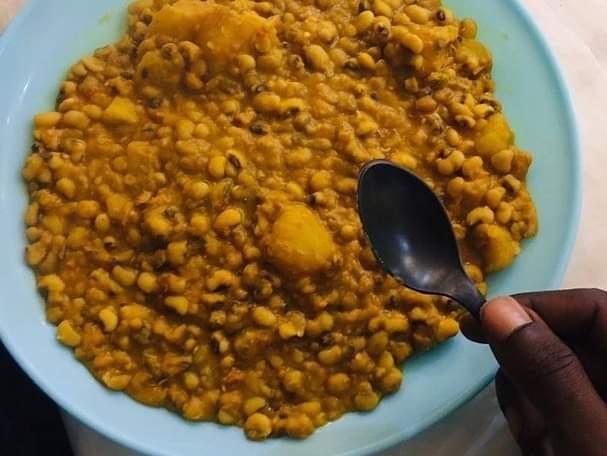
She has made varieties of foods including rice and beans, beans porridge, and spaghetti,  amongst others.

Credit: Twitter 

Nigerian judges’ retirement age increased from 65 to 70 years

Tinubu increases Nigerian judges’ retirement age from 65 to 70 years

President Bola Ahmed Tinubu  has signed the bill seeking to extend the retirement age of High Court judges from 65 to 70 years into law.

The president assented bill on uniform retirement age for judicial officers today, June 8, 2023.

In a terse statement on Thursday, Abiodun Oladunjoye, the Director of Information to the President, said Tinubu signed into law the “Constitution of the Federal Republic of Nigeria, 1999 (Fifth Alteration) (No. 37), 2023,” presented by the outgoing 9th National Assembly.

With the signing of the Constitutional Amendment Bill, judicial officers’ retirement age and pension rights have been effectively brought into uniformity, among other related matters.

While signing the amendment bill into law, Tinubu pledged his administration’s dedication to strengthening the judiciary, ensuring the rule of law, and empowering judicial officers to execute their responsibilities effectively.

The presidential assent to the amendment bill means that the retirement age of High Court judges has changed from 65 to 70 years.

Sunday, June 11, 2023

FULL TEXT OF DEMOCRACY DAY NATIONAL BROADCAST BY PRESIDENT BOLA AHMED TINUBU ON JUNE 12, 2023.

 DEMOCRACY DAY NATIONAL BROADCAST BY PRESIDENT BOLA AHMED TINUBU ON JUNE 12, 2023.

Fellow Nigerians,
It is exactly three decades today that Nigerians went to the polls to exercise their inalienable right to elect a President of their choice to lead the transition from military dictatorship to a representative government of the people.

The abortion, by military fiat, of the decisive victory of Chief Moshood Kashimawo Olawale Abiola of the defunct Social Democratic Party (SDP) in the June 12, 1993, presidential election, up to that time, the fairest and freest election in the country’s political evolution, turned out, ironically, to be the seed that germinated into the prolonged struggle that gave birth to the democracy we currently enjoy since 1999.

In rising to strongly oppose the arbitrary annulment of the will of the majority of Nigerians as expressed in that historic election, the substantial number of our people who participated in the struggle to de-annul the election signified their fierce commitment to enthroning democracy as a form of government that best ennobles the liberty, the dignity of the individual and the integrity as well as the stability of the polity. The fierce opposition to the annulment of the June 12, 1993, presidential election and the unrelenting pro-democracy onslaught it unleashed was the equivalent of the battle against colonial rule by our founding fathers that resulted in the gaining of Nigeria’s independence in 1960.

Just like the anti-colonial movement, the pro-June 12 vanguard demonstrated, once again, the enduring validity of the 19th century historian, Arnold Toynbee’s eternal postulation, that civilization and societies experience progress as they are forced to respond to challenges posed by the environment. The unjust annulment of a widely acknowledged free and fair election was a challenge that elicited resistance by a resurgent civil society, leading ultimately to the attainment of our 'second independence’ as exemplified by the return of democratic governance in 1999.

Fellow compatriots, we celebrate a day that has remained a watershed in our nation’s history, not just today, but for every June 12, for the endless future that our beloved country shall exist and wax stronger and stronger, generations of Nigerians will always remind themselves that the democracy that is steadily growing to become the defining essence of our polity was not gifted to us on a silver platter.

We can easily recall the sacrifice and martyrdom of Chief MKO Abiola, the custodian of the sacred mandate that was so cruelly annulled. He sacrificed his life in unyielding, patriotic defense of the ideals of democracy as symbolized in his choice, by his fellow countrymen and women, as their duly-elected President. There was an easier choice for him. It was to forgo the justice of his cause and opt for the path of ease and capitulation in the face of the tyranny of power. To his eternal credit and immortal glory, Abiola said no. He demonstrated the time-tested eternal truth that there are certain ideals and principles that are far more valuable than life itself.

Everyday, on this day, down the ages we will recall the several other heroes of democracy such as Kudirat Abiola, wife of Chief Abiola, who was brutally murdered while in the trenches fighting on the side of the people. We remember Pa Alfred Rewane, one of the heroes of our independence struggle and Major General Shehu Musa Yar'Adua (rtd) who were silenced by the military junta while in pursuit of democracy. They gave their yesterday for the liberty that is ours today.

List of The Most Populated Religion in the World 2023

Share This Post to get More VThe world’s most populated religions fall into two categories : Abrahamic religions , such as Christianity, Jud...